邮件礼仪:老师不会明说,但真的很在意
刚开学的这两周,大概是所有26级新生最忙碌、充实的一段时间了。
为了帮助大家更好地适应FIS节奏,学校安排了各式各样的活动:开学典礼、游园会、入学教育......
同学们在热闹的氛围里探索新环境,认识新伙伴,也一定接触到了很多具有FIS特色的校园规则。
但有一件事,至关重要却又经常被大家忽略——收发邮件。
和以往大家习惯用微信即时沟通不太一样,邮件是国际教育学院最正式、最主要的师生之间的沟通渠道。
教务通知、活动报名、院系新闻、考试安排,FIS大大小小的各类事项,几乎都会通过校园邮箱推送给大家。
按道理讲,除了假期,其余的每一天,你的邮箱里都会出现新的邮件等待查阅。
很多截止时间、重要事项提醒就在那里,一旦漏看,就有可能错过关键节点,给自己带来不必要的麻烦。
所以FIS真心建议同学们,一定要养成高频查看邮箱的习惯!每天至少要早上醒来看一遍,晚上睡前再看一遍,这样就保险很多了
当然,在FIS不仅要记得看邮件,更要知道如何发出一封合格的邮件。
根据FIS这些年的经验总结,大家在发送邮件方面一般有两种类型的问题。
一种是操作不够熟悉导致的失误。
最典型的就是收到群发通知邮件时,下意识直接点击回复,触发全部回复(Reply all)。
以FIS收到的下封群发邮件为例,这份邮件除了发给了我,还发给了其余17个人。如果我直接点击回复,那系统就是默认我要Reply all,即不仅发件人会收到我的回复,其余17个人也会同步收到。
这种乌龙最经常出现在FIS新学年伊始,甚至一度被FIS同学们当成开学经典名场面。
所以大家回复此类群发邮件时,一定记得手动将发送按钮改成Reply,避免不必要的麻烦。
除此之外,收件人邮址写错、忘记粘贴附件等其他失误,也是常见的操作问题。大家写好邮件后一定记得从头到尾检查一遍再发送。

(一张梗图送给大家,不知道FIS什么时候看到这张图能忍住不笑)
另一种邮件问题就比较让人头疼了——对邮件礼仪的忽视。
在FIS收到的「问题」邮件中,有把内容一股脑全打在邮件标题上,正文一个字都没有的;也有写了正文,但邮件标题却一个字没有的。
也有标题和正文都写了,但正文开头既没有称呼,结尾也没有结束语和署名的;还有借用了AI模板,但内容却没有修改就直接发过来的......
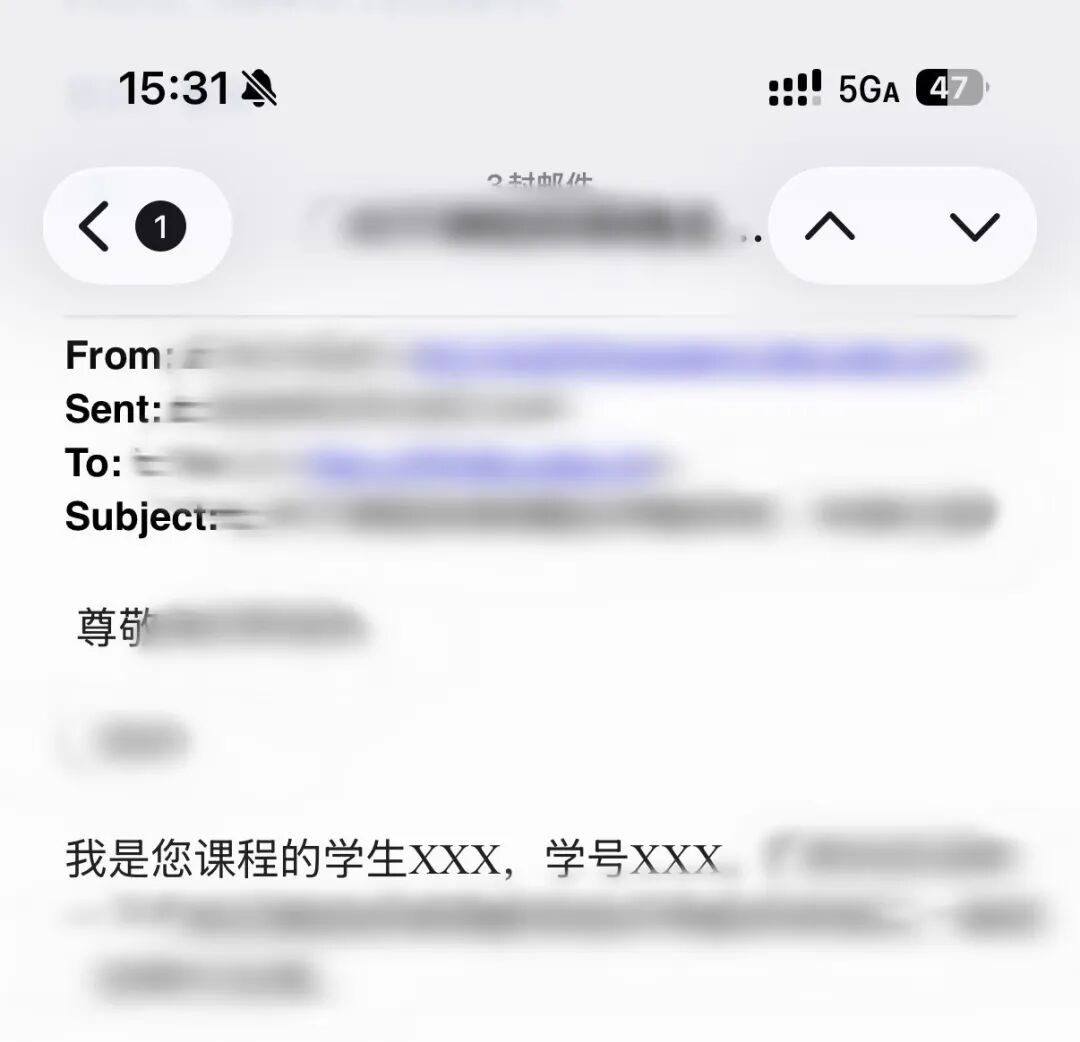
(这不是我打的马赛克,同学的邮件内容就是XXX)
借用一句话就是:得体的邮件大同小异,不合格的邮件各有各的问题。
邮件礼仪并不是可有可无的「繁文缛节」,尤其是大家在和老师的沟通过程中,它在一定程度上代表了你写这封邮件的诚意如何。
还记得我们以前考试,老师经常提到要保持卷面整洁,争取拿到卷面分。FIS觉得,其实邮件也是你线上的「卷面分」。
一封格式潦草、表述随意的邮件,首先就会给收件人留下不太好的初印象。即便你的诉求合理,也有可能因为观感问题,影响沟通效果。
那一封得体规范的FIS邮件,应该怎么写呢?
因为FIS的教学语言是英语和中文,所以FIS整理了一个英文邮件实用模板,供大家参考。
1、要有清晰明确的邮件主题,可以使用「核心事件+关键信息」的格式。
正确示例:Enquiry about XXX course
错误示例:Help/Hello/Question
2、合适的称呼与问候。
邮件正文开头需要附上称呼,比如Dear Xiaoli,不要使用过于随意的Hey/Hi开头。
3、逻辑清晰的正文。
正文建议分成三段来讲。首先简单自我介绍,说明你的姓名、学号与专业;其次讲清楚遇到的问题;最后清晰说出你的诉求。
如果篇幅较长,记得分段,方便收件人快速读懂你的意思。
4、附件不要遗漏。
如果邮件附带材料,正文当中记得提示「Please find the attachment below」,并确认附件格式是否正确。
5、礼貌收尾、完整落款。
结尾一般可以写上Best regards/Kind regards等礼貌用语,最后落款附上姓名、学号。
这里给大家放一个简易示范:
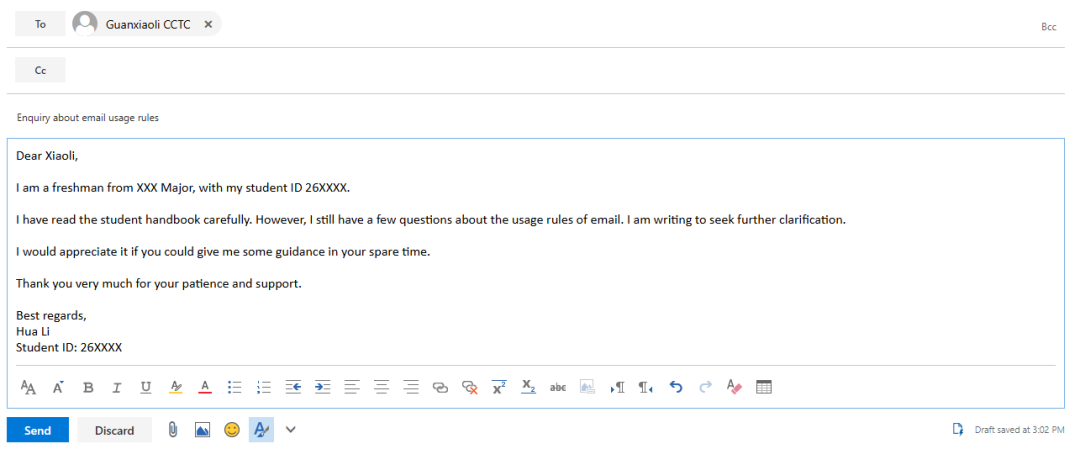
一封合格的邮件就这样写好啦,其实并不难。
当然,写好之后,发送的时间与方式也需要注意一下。
同学们尽量选择工作日正常时间段发送,非紧急情况不要深夜发送。
邮件发出后,若系统显示成功,那就是投递成功了,无需再发送多遍「轰炸」他人邮箱。若迟迟得不到回复,再发。
前段时间,新华社发过一篇和邮件礼仪相关的文章,评论区有条留言是这样的:「你无心的时候,别人很用心,这就是差别。」
一封邮件的格式规不规范,好像只是件无关紧要的小事。但拉开差距的,恰恰就是这些容易被忽视的细节。
很多时候,它就代表着你的做事思维,代表着你的用心程度。
发送一封邮件不只是一次沟通,也是一次自我表达的训练。
当你开始注重细节,你传递给他人的,就不止一段文字。
Email Etiquette at FIS: Common Issues and Recommended Practices
1. The Role of Email at FIS
At the Faculty of International Studies (FIS), email serves as the most formal and primary channel of communication between faculty and students. Course notices, event registrations, faculty news, and exam schedules are distributed through campus mailboxes. Except during holidays, new emails are typically received daily. Missing a single email may result in missed deadlines or unnecessary complications. A recommended habit is to check email at least twice daily—once upon waking and once before bed.
2. Common Operational Mistakes
Students unfamiliar with email tools frequently make avoidable errors. The most common is the unintended use of "Reply All" when responding to group notifications. For example, a group email sent to eighteen recipients (the author plus seventeen others) will default to Reply All if the user simply clicks "Reply." This results in all recipients receiving the response. Such incidents are particularly frequent at the start of the academic year. To prevent this, the send option should be manually changed to "Reply." Other operational errors include incorrect recipient addresses, forgotten attachments, attachments placed in the email body, and improperly attached Google Docs. Proofreading the entire email before sending is advisable.
3. Common Etiquette Violations
A second category of problems involves ignoring email etiquette. Examples include messages entirely contained in the subject line with an empty body, bodies without subject lines, messages lacking salutations or signatures, and AI-generated templates sent without modification. Email etiquette is not dispensable formality; particularly in communication with professors, it reflects the sincerity of the sender. Just as exam papers were once expected to be neat for "presentation points," emails serve as an online equivalent. A sloppily formatted or casually worded email creates a poor first impression and may affect the outcome of the communication, even when the request itself is reasonable.
4. Recommended Structure for a Proper Email
Given that FIS uses both English and Chinese as teaching languages, the following English template is provided:
Subject line: Clear and specific, using the format "core event + key information." Good example: "Inquiry about XXX course." Bad examples: "Help," "Hello," "Question."
Salutation and greeting: Begin with a salutation such as "Dear Xiaoli." Overly casual openings like "Hey" or "Hi" are inappropriate.
Body: Recommended as three paragraphs. First, briefly introduce oneself (name, student ID, major). Second, explain the problem. Third, state the request clearly. Longer messages should be broken into paragraphs for readability.
Attachments: If materials are included, mention "Please find the attachment below" in the body and verify the file format.
Closing and signature: End with a polite phrase such as "Best regards" or "Kind regards," followed by name and student ID.
5. Timing and Follow-Up
Emails should be sent during normal working hours on weekdays. Late-night sending should be avoided unless urgent. After a successful send, no repeated sending is necessary. If no reply is received after a reasonable period, a follow-up may be sent.
6. Conclusion
As noted in a comment under an article on email etiquette published by Xinhua Press: "When you're careless, others are putting in effort—that's the difference." Proper email formatting may appear trivial, but such overlooked details often widen the gap. Email communication reflects one's way of thinking and level of care. Sending an email is not merely a communication act but also a training ground for self-expression. Attention to detail ensures that more than a block of text is conveyed to the recipient.
Reference from: 西浦邮件礼仪:老师不会明说,但真的很在意